
 The Short Answer
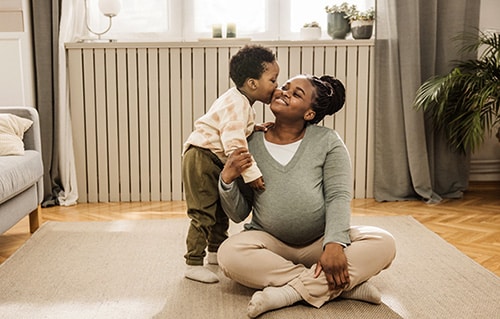
Yes, in most cases you can carry your toddler while pregnant, but with important exceptions. Unless your healthcare provider has told you otherwise, lifting a toddler is generally safe during a low-risk pregnancy.
The key is listening to your body, using proper technique, and knowing when to stop.
Is It Safe to Pick Up a Toddler While Pregnant?
One of the most common questions pregnant moms ask is: “Can I carry my toddler while pregnant?” The reassuring answer is that most healthy pregnancies allow for it, at least in the early months.
That said, a few factors affect how long and how safely you can keep it up:
- Your trimester. Lifting is typically easiest in the first trimester. As your belly grows, your center of gravity shifts, making it harder to lift safely and putting more strain on your lower back.
- Your toddler’s weight. A 25–35 pound toddler is a significant load, and that load doesn’t get lighter as your pregnancy progresses.
- Your overall health. If you have a high-risk pregnancy, pelvic girdle pain, placenta previa, or have been told to avoid strenuous activity, follow your provider’s guidance carefully.
- Your energy and stamina. Pregnancy fatigue is real. Avoid lifting to the point of exhaustion.
What the Experts Say
Medical guidance is consistent: carrying moderately heavy loads during a normal pregnancy is not usually harmful. However, exerting yourself to the point of fatigue is a concern, both for your body and your pregnancy.
As your bump grows, the physical mechanics of picking up a toddler change significantly. Your core muscles are under increasing strain from supporting your growing uterus, which means your back takes on more of the lifting work — and that’s where injuries can happen.
How to Lift a Toddler Safely During Pregnancy
If your provider has given you the green light, good lifting form becomes even more important when you’re pregnant:
- Bend at the knees, not the waist. Squat down to your toddler’s level rather than bending forward.
- Keep the load close to your body. Hold your toddler against your chest/side rather than out in front of you.
- Engage your core (gently). Support your midsection as you lift.
- Avoid twisting while lifting. Turn with your feet, not your back.
- Take breaks. Don’t carry your toddler for extended periods if your back or hips are protesting.
- Stop if something hurts. Any sharp pain, pelvic pressure, or cramping is a signal to put your toddler down and rest.
When to Stop Carrying Your Toddler
There’s no one-size-fits-all cutoff, but many pregnant women naturally find carrying a toddler becomes too uncomfortable by the second or third trimester. Signs it may be time to ease up:
- Persistent lower back or hip pain
- Pelvic girdle pain (SPD)
- Shortness of breath with exertion
- Dizziness or lightheadedness
- Braxton-Hicks contractions triggered by lifting
If any of these occur, talk to your midwife or OB before continuing to lift.
How to Talk to Your Toddler About It
If you do need to limit carrying your toddler, the transition can be emotionally hard — for both of you. A tip many moms find helpful: blame your back, not the baby.
Telling a two-year-old “Mommy’s back is tired” is much easier for a toddler to accept than “the baby won’t let me.” Framing it this way avoids any early feelings of jealousy or resentment toward your new baby before they even arrive.
Other ideas to stay close without carrying:
- Get down on the floor to cuddle at their level
- Use a sturdy step stool so your toddler can climb up for hugs
- Spend extra one-on-one time with books, puzzles, or snuggles on the couch
Frequently Asked Questions
Can lifting a toddler cause a miscarriage?
In a normal, low-risk pregnancy, lifting a toddler is very unlikely to cause miscarriage. Miscarriage in the first trimester is most often due to chromosomal factors, not physical activity. If you’re concerned, discuss your specific situation with your provider.
Can carrying a toddler hurt the baby in my womb?
Your baby is well-protected by amniotic fluid and your uterus. Routine lifting of a toddler, done with good form, does not typically pose a risk to a healthy pregnancy.
What is a safe weight to lift during pregnancy?
There’s no universal limit, but many providers recommend keeping loads under 25–36 pounds for low-risk pregnancies and avoiding heavy repetitive lifting. Again, individual guidance from your OB or midwife matters most.
At what point in pregnancy should I stop lifting my toddler?
Many women comfortably lift through the second trimester and reassess as they enter the third. Let pain, fatigue, and your provider’s advice guide you — not a fixed date.
Talk to Your Provider
Every pregnancy is different. If you’re unsure whether it’s safe to carry your toddler while pregnant, the best thing you can do is ask your OB or midwife at your next appointment. They can assess your specific situation and give personalized guidance.
Have a pregnancy question? Browse our Questions & Answers section or explore more tips on the Pregnancy Help Online blog.
Editor’s Note: This article was originally published on June 18, 2013, and has since been updated.