
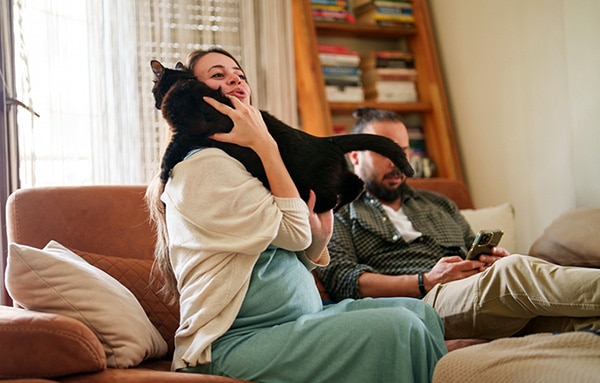
 If you’re pregnant and have a cat at home, you might have heard that you should get rid of it. Don’t worry. Cats aren’t bad for pregnancy, and in most cases, you don’t need to give up your pet.
The concern is about a parasite that cats can carry, but with some simple habits, the risk stays very low.
The short answer: are cats bad for pregnancy?
No. Having a cat does not harm your pregnancy. The main worry is toxoplasmosis, an infection from the parasite Toxoplasma gondii. Most healthy adults don’t notice any symptoms, but getting infected for the first time during pregnancy can affect your baby. The risk is small and easy to lower with good hygiene. In fact, undercooked meat and unwashed produce are bigger sources of infection than your cat.
What is toxoplasmosis, and why does it matter during pregnancy?
Toxoplasmosis comes from a parasite that can live in many animals and people. Most people who get it feel fine or just have mild, flu-like symptoms, so many never realize they were infected. After you’ve had it once, you usually become immune.
The main worry during pregnancy is getting infected for the first time. If this happens, the parasite can sometimes cross the placenta. Depending on when it happens, it can increase the risk of miscarriage or stillbirth, or cause problems with the baby’s eyes or brain. Early infections are less likely to reach the baby, but if they do, they can be more serious. That’s why prevention is important and why you should talk to your doctor or midwife.
How do cats spread toxoplasmosis?
Cats get the parasite by eating infected prey like mice or birds, or by eating raw meat. For a short time after their first infection, usually one to three weeks, they pass tiny parasite eggs in their stool. Most cats only go through this once in their lives, often when they are young.
There are two reasons why the risk is lower than most people think:
- You can only get infected if you swallow the parasite. Petting or cuddling your cat won’t spread it.
- Fresh cat stool isn’t infectious right away. The parasite usually needs at least a day or more to become infectious, so cleaning the litter box every day is very helpful.
An indoor cat that eats commercial cat food and doesn’t hunt is very unlikely to be carrying or spreading the parasite.
Do I have to get rid of my cat when I’m pregnant?
No. You usually don’t need to give up a healthy, much-loved pet, and losing a companion can be stressful. If you’ve had cats for a long time, you might already have been exposed to toxoplasmosis and developed immunity. Ask your doctor if a blood test is right for you. Some doctors test everyone, while others only test if you have symptoms.
How to protect yourself and your baby: a practical checklist
Around the litter box
- Ask someone else to scoop the litter box for the length of your pregnancy.
- If you have to do it yourself, wear disposable gloves, scoop daily, and wash your hands well afterward.
- Keep the litter box away from where you prepare or eat food.
With your cat
- Keep your cat indoors so it can’t hunt birds or mice.
- Feed commercially prepared cat food rather than raw meat.
- Wash your hands after you pet or play with your cat, and don’t let your cat on kitchen counters or tables.
- Make sure your cat’s vaccinations, flea treatments, and worming are up to date. Ask your vet which products are best for your home.
- Talk to your vet if you’re concerned about your cat’s health. It’s especially important if your cat hunts or eats raw food.
In the garden
- Wear gloves when you garden or handle soil, and wash your hands afterward.
- Stay away from soil and sandboxes that outdoor cats might use as a bathroom, and cover sandboxes when you’re not using them.
In the kitchen
- Cook meat thoroughly, and order meat well done when you dine out.
- Wash all fruits and vegetables well, especially if they come from a home garden, or peel or cook them.
- Wash your hands, cutting boards, and knives after handling raw meat.
- Avoid unpasteurized milk and products made from it.
When to call your doctor
Call your doctor or midwife if you’re pregnant and have flu-like symptoms, swollen glands, unusual tiredness, or if you’re worried about possible exposure. There are tests and treatments available, and it’s better to get advice early than to stay worried.
Pregnant and worried about more than your cat?
For many women, worries about cats and toxoplasmosis are just the beginning. If your pregnancy was unexpected, you might be facing bigger questions: Can I afford this? Am I ready to be a parent? What should I do next?
You don’t have to figure everything out alone, and you don’t have to decide right away. Adoption is one option that some women find reassuring, where you choose the family, how much contact you want, and what the plan will be. You can read more in our guide The Adoption Option: You Make the Choices or look into all your pregnancy options.
Frequently asked questions
Are cats bad for pregnancy?
No. Cats are not bad for pregnancy. The only real concern is toxoplasmosis, and a few simple precautions, especially not handling the litter box, make the risk very low.
Can I pet my cat while I’m pregnant?
Yes. It’s safe to pet and cuddle your cat. Just remember to wash your hands afterward.
Can I clean the litter box while pregnant?
It’s best to have someone else do it. If you need to do it yourself, wear disposable gloves, scoop every day, and wash your hands well afterward.
Can indoor cats give you toxoplasmosis?
It’s unlikely. Indoor cats that eat commercial food and don’t hunt rarely have the parasite. Undercooked meat and unwashed produce are actually more common sources.
How long is a cat contagious with toxoplasmosis?
A cat usually sheds the parasite in its stool for one to three weeks after its first infection, and this usually happens only once in its life.
Should I rehome my cat if I’m pregnant?
In almost all cases, no. Follow the hygiene steps above and talk to your doctor if you’re worried.
If you’re pregnant and unsure what comes next
Whether you’re worried about the litter box or facing a bigger decision, support is available. If you’re thinking about adoption, you can find out how it works and how much choice you have, or talk to someone who can help. There’s no pressure or obligation.
This article is for general information and is not medical advice. Always talk with your doctor or midwife about your own pregnancy.
Editor’s Note: This article was originally published on August 13, 2013, and has since been updated.